Existing clients

Log in to your client extranet for free matter information, know-how and documents.

Client extranet portal

Staff

Mills & Reeve system for employees.

Staff Login

The hidden impact of family court delays

Scales Of Justice illustration

New analysis reveals that private law family court cases take an average of nine months to conclude, leaving children facing prolonged uncertainty and the equivalent of a full school year or six summer holidays in legal limbo.

For many separating families, the private law family courts become a prolonged and complex process, with cases often involving repeated hearings, differing regional pressures and limited consistency in howlong proceedings take to reach a conclusion. 

Here at Mills & Reeve, we submitted Freedom of Information (FOI) requests to HM Courts and Tribunals Service (HMCTS) to examine case volumes, duration, hearings and regional patterns across private law family court proceedings in 2024 and 2025.

We’ve also partnered with Donna Morgan, an experienced counsellor with more than 26 years of practice supporting children, young people, adults and families, to explore how parents can better support children through separation and reduce the emotional impact during periods of uncertainty.


Case numbers remain high with long durations

In private law, the family courts dealt with 44,494 cases in 2024, with an average duration of 41.8 weeks and 2.5 hearings per case.

In the first half of 2025, there were 20,075 cases, with an average duration of 39.7 weeks and 2.4 hearings per case.

These figures indicate that while there has been a slight reduction in average duration, private law cases continue to take close to nine months to conclude on average, with little change in the number of hearings required per case.

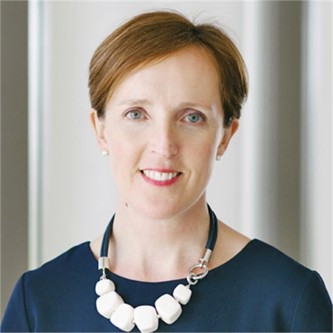
  • Alison Bull in a dark jacket, in front of a pale background
    It’s clear that too many families are still facing significant delays in the family courts, with cases routinely lasting around nine months. For children, that is not just a legal process on paper, it’s the equivalent of a full school year spent in uncertainty or around six summer holidays. Research shows that outcomes for children and young people can be negatively affected by ongoing parental disagreement and conflict, which can further feed into that uncertainty. While there are some signs of improvement in parts of the system, overall progress remains limited and uneven. The picture continues to point to sustained pressure on the family courts, with persistent delays and variability in outcomes across different types of cases and regions, indicating that underlying challenges in capacity and timeliness have not yet been fully addressed.
    Alison Bull
    Partner

Regional variation shows differences across England and Wales

The data also highlights regional variation in how often hearings take place within private law family court cases.

Region

2024 hearings per case

2025 hearings per case 

London

2.3

2.4

South East

2.5

2.4

North East

2.6

2.4

North West

2.8

2.8

South West

2.4

2.4

Midlands

2.5

2.3

Wales

2.5

2.1

Across both years, the North West remained the highest region for hearings per private law family court case across both 2024 and 2025, recording an average of 2.8

This places the North West consistently above all other regions in terms of court activity per case, with only the North East approaching similar levels in 2024 with an average of 2.6 before moving slightly lower in 2025.

Meanwhile, London recorded the lowest average hearings per case in 2024 at 2.3, while Wales recorded the lowest average in 2025 at 2.1.

Why delays matter for families and children

Prolonged proceedings can leave families without certainty over arrangements for children or financial settlement, with cases often involving multiple hearings over extended periods.

These delays can prolong disputes and make it more difficult for families to move forward. For children in particular, extended timelines can mean prolonged periods of instability while decisions about living arrangements, schooling and contact are unresolved.

Donna Morgan, an experienced counsellor with more than 26 years of practice supporting children, young people, adults and families, said:

“In my experience, it is often the uncertainty surrounding separation and divorce that has the greatest emotional impact on children. Children are remarkably resilient when they feel safe, informed and supported. However, when decisions remain unresolved for extended periods, children can be left feeling anxious, confused and emotionally unsettled.

Children rely on stability and predictability to feel secure. When they are unsure where they will live or when they will see each parent, many begin to worry about things they cannot control. What they need is reassurance, consistency and confidence that the adults around them are working to protect their wellbeing. This can make a significant difference to a child's emotional health both during separation and in the years that follow.”

Family arbitration offers an alternative route outside the court system

Family arbitration is a private process used to resolve financial and children arrangement disputes when couples separate, providing a binding decision without the need for court proceedings where agreement cannot be reached through mediation or negotiation.

It is commonly used in disputes involving financial settlements on divorce or separation, as well as arrangements for children. The process is typically faster and more flexible than court, allowing parties to agree timetables and procedures and in many cases reduce costs.

Parties can also choose their arbitrator from experienced family law professionals including solicitors, barristers, legal executives and retired judges. The process is confidential, unlike court proceedings which may be subject to public reporting.

  • Jane Ingleby in a black floral top, in front of a grey background
    When court timetables are stretched, families often benefit from considering alternative routes to resolution. Solutions like family arbitration offer a private and structured way to resolve disputes about finances and children without the delays of court. It allows parties to choose an experienced decision-maker, set more flexible timetables and reach binding outcomes more quickly, while maintaining confidentiality. For many separating couples, it can provide a more efficient and focused way of resolving issues at what is often a very difficult time.
    Jane Ingleby
    Partner

Expert legal support for families navigating separation and dispute resolution

Family separation and disputes involving children and finances can be complex, emotionally challenging and difficult to resolve without clear legal guidance. Delays in the court system can add further uncertainty, making it harder for families to reach timely and workable outcomes.
For many individuals, understanding the options available outside of court is an important first step in finding a resolution that works for everyone involved. Early advice can help clarify the process, reduce conflict and support more informed decision making at a difficult time. 

At Mills & Reeve, our family law specialists help individuals and families navigate the complexities of separation and disputes involving children and finances, providing expert guidance on resolving matters efficiently and understanding the options available outside of court.

If you’re dealing with private law family court proceedings and want to explore alternative routes to resolution or better understand how family arbitration could help you, contact our family law team below or complete our enquiry form.

Get in touch

Our team of legal experts are here to support you.
Contact one of our family lawyers today.

Meet our arbitrators

Methodology

Data obtained via Freedom of Information request submitted to HM Courts and Tribunals Service (HMCTS) on 18 March 2026. The response was received on 17 April 2026 and included case volumes, duration, hearing rates and regional breakdowns for private law family court cases across 2024 and 2025.