Existing clients

Log in to your client extranet for free matter information, know-how and documents.

Client extranet portal

Staff

Mills & Reeve system for employees.

Staff Login

The family law option most Brits don't know exists

Scales Of Justice illustration

New research reveals that three quarters of Brits are unaware that family law disputes can be resolved through private legal processes, despite growing public appetite for faster alternatives to lengthy court proceedings.

For families navigating separation or financial disputes, reaching a resolution can become a prolonged and complex process, with uncertainty over timelines, limited flexibility and challenges in finding a clear path forward. As a result, more people are seeking solutions that provide greater certainty and control.

Here at Mills & Reeve, we commissioned a survey of 1,000 people in partnership with Censuswide to explore public attitudes towards popular private services available in the UK, compared to public services, awareness of private family law options and the factors influencing their drivers for opting for a private route.


Britons are willing to pay more to avoid lengthy delays

The research found that speed, flexibility and certainty are becoming increasingly important factors when people consider private services.

Almost two in five (38.9%) said they would pay a premium for a private service if it meant receiving a faster service or shorter waiting time. More than two in five (42%) are already paying for one or more private service, with private dental care proving the most popular option, used by 21% of respondents.

More than one in four (27%) said they would choose a private service specifically to access a faster service, while 24% would do so for a better overall experience and 16.5% would pay privately if it resulted in better outcomes.

Similarly, when asked why they believe people choose private services over public alternatives, 24.1% said they expected a better service, 21.6% believed they would receive a faster service and 20.3% expected better outcomes.

When asked how much extra they would be willing to pay, 21% said they would pay up to £250 more, while a further 15% would pay up to £500.

  • Matthew Heyworth in a brown jacket and white shirt, in front of a pale background
    People are increasingly recognising the value of certainty, efficiency and timely decision making. Our research shows that many are prepared to invest in solutions that help them avoid lengthy delays and uncertainty, with people looking for greater control and reassurance when navigating important decisions. This reflects a wider shift in expectations, with people placing greater value on choice and flexibility. Family disputes often arise during some of the most stressful periods in people's lives, so being able to resolve issues more quickly can reduce emotional strain, improve communication and help those involved move forward sooner.
    Matthew Hayworth
    Partner

Most people remain unaware that private family law options exist

Despite the demand for faster services, awareness of private family law options remains low.

Just one in four (25%) respondents knew that family law disputes can be resolved privately, meaning 75% of Brits are currently unaware these alternatives exist.

The research also found that more than half (51%) agreed that people should be allowed to pay privately for a faster resolution of legal disputes, suggesting there is broad public support for greater choice in how legal issues are resolved.

Meanwhile, 13.8% said reducing stress would be a key motivation for paying for a faster legal resolution.

These findings suggest there is a significant gap between public demand for quicker dispute resolution and awareness of the options available. As more people look for greater certainty and control over the legal process, understanding the different routes to resolution is becoming increasingly important.

Why Private FDRs and Early Neutral Evaluation are becoming increasingly popular

Private Financial Dispute Resolution (Private FDR) and Early Neutral Evaluation (ENE) are alternative methods of resolving family law disputes outside the traditional court system.

Rather than waiting for a court hearing, separating couples appoint an experienced family law specialist, such as a solicitor, barrister or retired judge, to provide an independent view on the likely outcome and help them work towards an agreement. This expert guidance helps parties negotiate a practical agreement without the delays associated with court proceedings.

Private FDRs are commonly used for financial disputes following separation or divorce, while ENEs are often used where disagreements relate to arrangements for children.

The process is confidential, flexible and allows families to choose hearing dates that work for them, often significantly reducing waiting times.

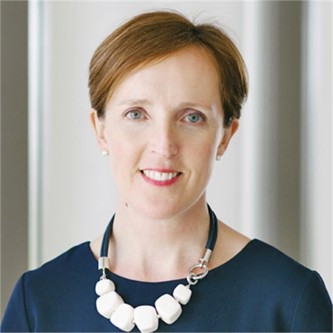
  • Katherine Kennedy in a geometric patterned grey jacket, in front of a door
    One of the greatest advantages of Private FDRs and ENEs is that families are no longer constrained by court availability. They can choose an experienced evaluator, agree a suitable timetable and dedicate time to resolving the issues that matter most, rather than waiting months for a court hearing date. Private FDRs provide a focused and constructive environment where both parties can receive expert guidance and work towards reaching an agreement. In many cases, this allows families to resolve matters sooner than through the court process, reducing stress, legal costs and the emotional impact of prolonged uncertainty.
    Katherine Kennedy
    Partner

How Private FDRs and ENEs work in practice

Our family team regularly recommends Private FDRs and ENEs because our experience has demonstrated the significant benefits they can provide.

In one recent case, we advised a high-earning father following separation from his partner. While arrangements for their daughter had been agreed, disputes remained over child maintenance and wider financial matters.

A Private FDR was arranged well in advance, allowing all parties sufficient time to prepare. During the hearing, every outstanding issue was successfully resolved, providing certainty for both parents and allowing the family to move forward without the need for further court proceedings.

Expert legal support for families seeking faster dispute resolution

Whether disputes relate to finances, property or arrangements for children, understanding the full range of options available can make a significant difference to both the outcome and the experience.

Private FDRs and ENEs provide an effective alternative for many families, helping them avoid unnecessary delays while retaining expert legal guidance throughout the process.

At Mills & Reeve, our specialist family lawyers regularly advise clients on whether Private FDRs, ENEs or other forms of alternative dispute resolution are appropriate for their circumstances. We work closely with families to help them reach practical, informed agreements as efficiently as possible.

If you're navigating separation or a family dispute and would like to understand whether a Private FDR or Early Neutral Evaluation could be right for you, contact our family law team below or complete our enquiry form.

Get in touch

Our team of legal experts are here to support you.
Contact one of our family lawyers today.

Meet our family lawyers

Methodology

The research was conducted by Censuswide, across a sample of 1,000 Nationally Representative Consumers. The data was collected between 25 June and 29 June.

Censuswide is a member of the Market Research Society (MRS) and the British Polling Council (BPC) and a signatory of the Global Data Quality Pledge. It adheres to the MRS Code of Conduct and ESOMAR principles.